Feature Research Findings
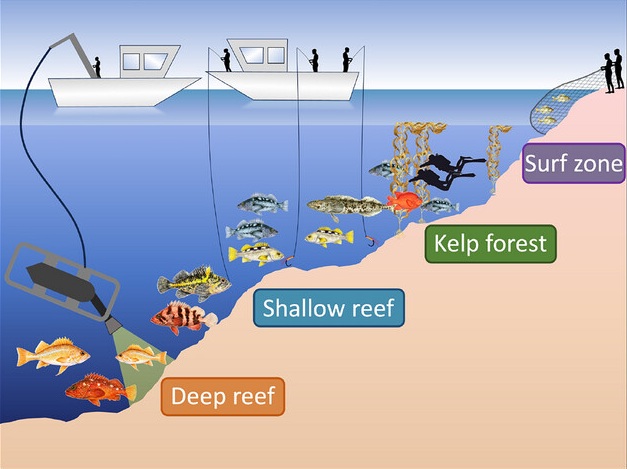
Conservation benefits of a large marine protected area network that spans multiple ecosystems
This study evaluated the conservation performance of 59 MPAs in California's network across four primary ecosystems. The research found that fish biomass for targeted species was significantly greater inside no-take MPAs compared to areas open to fishing, highlighting the importance of MPA age, pre-implementation pressure, and habitat diversity.
Read Full Paper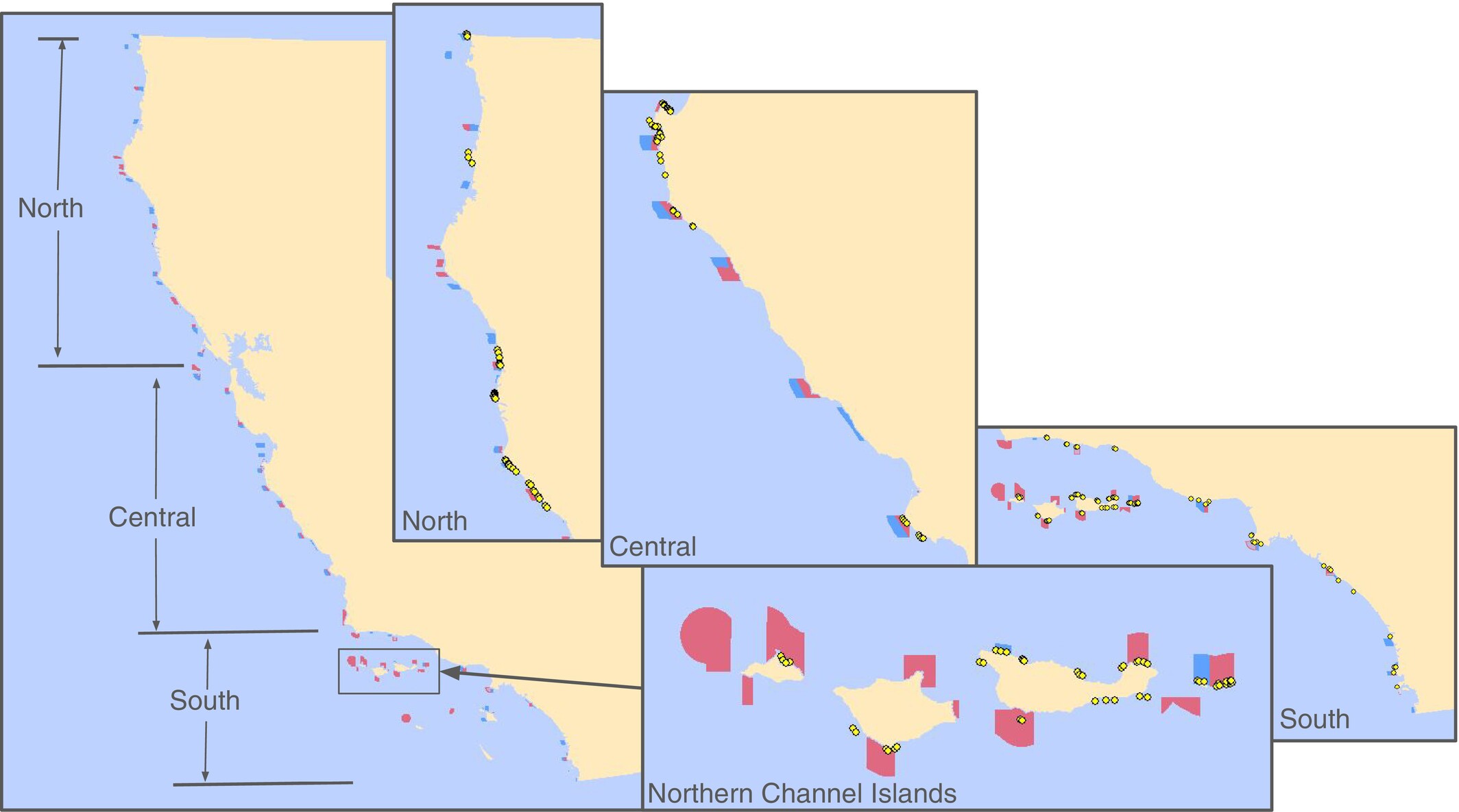
Measuring biological effectiveness across a very large, coherent network of coastal marine protected areas
Using SCUBA survey data from long-term monitoring programs, researchers assessed the performance of California's coastal MPA network. The study demonstrated that targeted species generally increased or declined less within MPAs, though performance varied by region and specific taxonomic group, emphasizing the need for comprehensive evaluation metrics.
Read Full Paper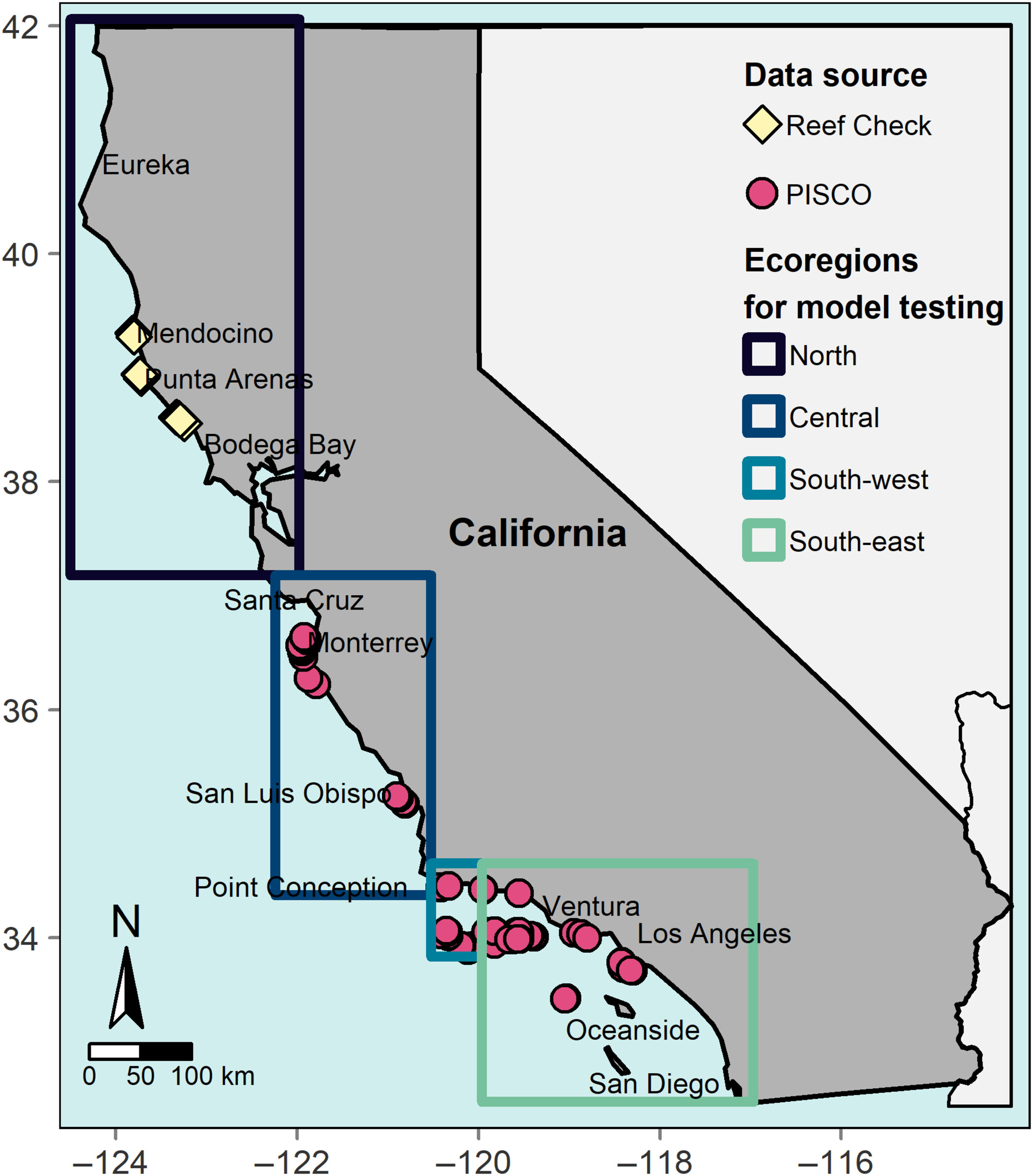
Drivers of spatiotemporal variability in a marine foundation species
This research utilized long-term monitoring data across 1350 km of California's coast to identify regional drivers of kelp density. The findings show that nutrient availability, wave energy, sea urchin density, and temperature are key predictors of kelp health, providing essential insights for predicting future ecosystem shifts under climate change.
Read Full Paper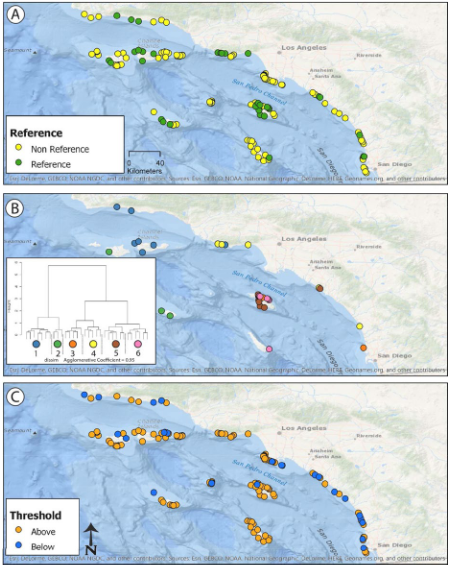
Development of a biological condition assessment index for shallow, subtidal rocky reefs in Southern California, USA
This study developed a quantitative biological condition index for shallow (<30 m) rocky reefs in the Southern California Bight, using a predictive observed-to-expected (O/E) taxa ratio—an approach common in freshwater monitoring but never before applied to rocky reefs. The index successfully distinguished healthy from stressed sites and was used to examine how reef condition correlates with ecosystem stressors such as fishing and water quality.
Read Full Paper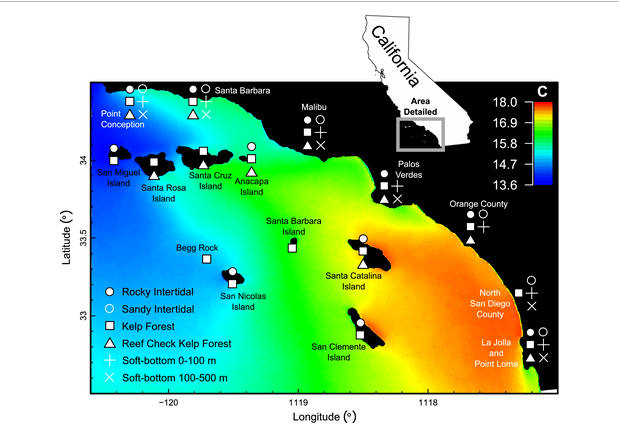
Biogeographic patterns of communities across diverse marine ecosystems in southern California
This study integrated baseline monitoring data from five programs to compare large-scale spatial patterns across 12 community types—invertebrates, fishes, and algae—spanning rocky intertidal, sandy intertidal, kelp forest, and shallow and deep soft-bottom subtidal ecosystems in the Southern California Bight. The research found that geographically close or environmentally similar regions tended to have more similar communities, and that rocky intertidal algae were highly congruent with nearly all other community types, while fish and invertebrate communities rarely tracked one another—patterns with important implications for the design of long-term monitoring programs.
Read Full Paper
Large-scale, multidecade monitoring data from kelp forest ecosystems in California and Oregon, USA
This data paper presents a large-scale, multidecade monitoring dataset documenting fish, invertebrate, and algal communities across kelp forest ecosystems spanning the coasts of California and Oregon. Because kelp forests are among the most productive ecosystems on Earth and generate a wide range of supporting, regulating, provisioning, and cultural ecosystem services, they have long been a target of ecological study—and this long-term record provides a resource for tracking how these communities change over time.
Read Full Paper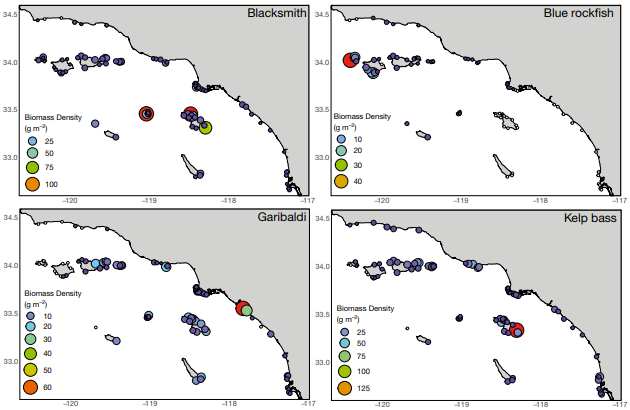
Assessing drivers of rocky reef fish biomass density from the Southern California Bight
This study used generalized least-squares modeling to identify the physical and biological factors driving variation in nearshore rocky reef fish biomass across 89 sites in the Southern California Bight, incorporating in-situ SCUBA surveys alongside remotely sensed variables including a novel "distance to the 200 m isobath" metric as a proxy for upwelling. The research found that fish biomass was greatest at reefs with cooler water, steeper slopes, higher habitat heterogeneity, and proximity to the continental shelf break, indicating that oceanographic forcing and geologic complexity—rather than any single reef feature—drive where high fish biomass accumulates.
Read Full Paper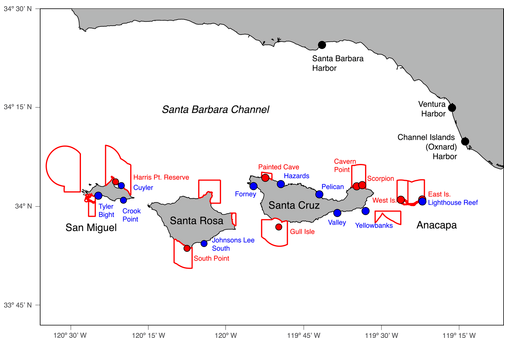
Analysis of fish population size distributions confirms cessation of fishing in marine protected areas
This study developed a new size-structured population modeling approach to directly test whether fishing has actually stopped inside marine protected areas, applying it to four kelp forest fish species across MPAs and open reference sites in the California Channel Islands from 2003 to 2017. The research found that harvest rates were effectively zero inside most MPAs—indicating strong compliance with no-take regulations—while rates at nearby fished sites were much higher, suggesting fishing effort had been displaced rather than eliminated, though minor poaching was detected at two MPA locations.
Read Full Paper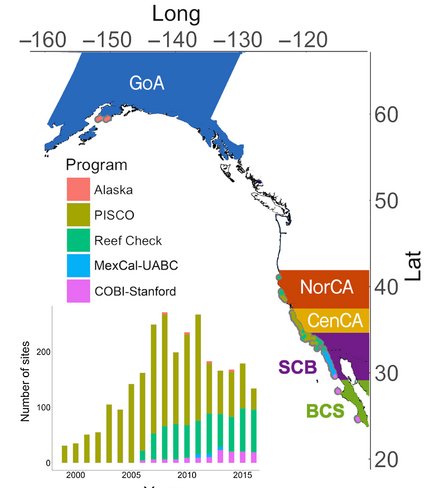
Geographic variation in responses of kelp forest communities of the California Current to recent climatic changes
This study integrated multiple long-term kelp forest monitoring datasets spanning from Alaska to Baja California to evaluate how key functional groups responded to recent climate variability, including a major marine heatwave, across the California Current. The research found that responses varied geographically—with some regions, such as Baja California Sur, seeing declines in both kelps and urchins—and concluded that kelp-dependent coastal communities in the southern portion of the region will be most impacted, underscoring the urgency of adaptive strategies to sustain livelihoods and food security.
Read Full Paper